How to Ship Luggage Home from Italy: Packing & Customs
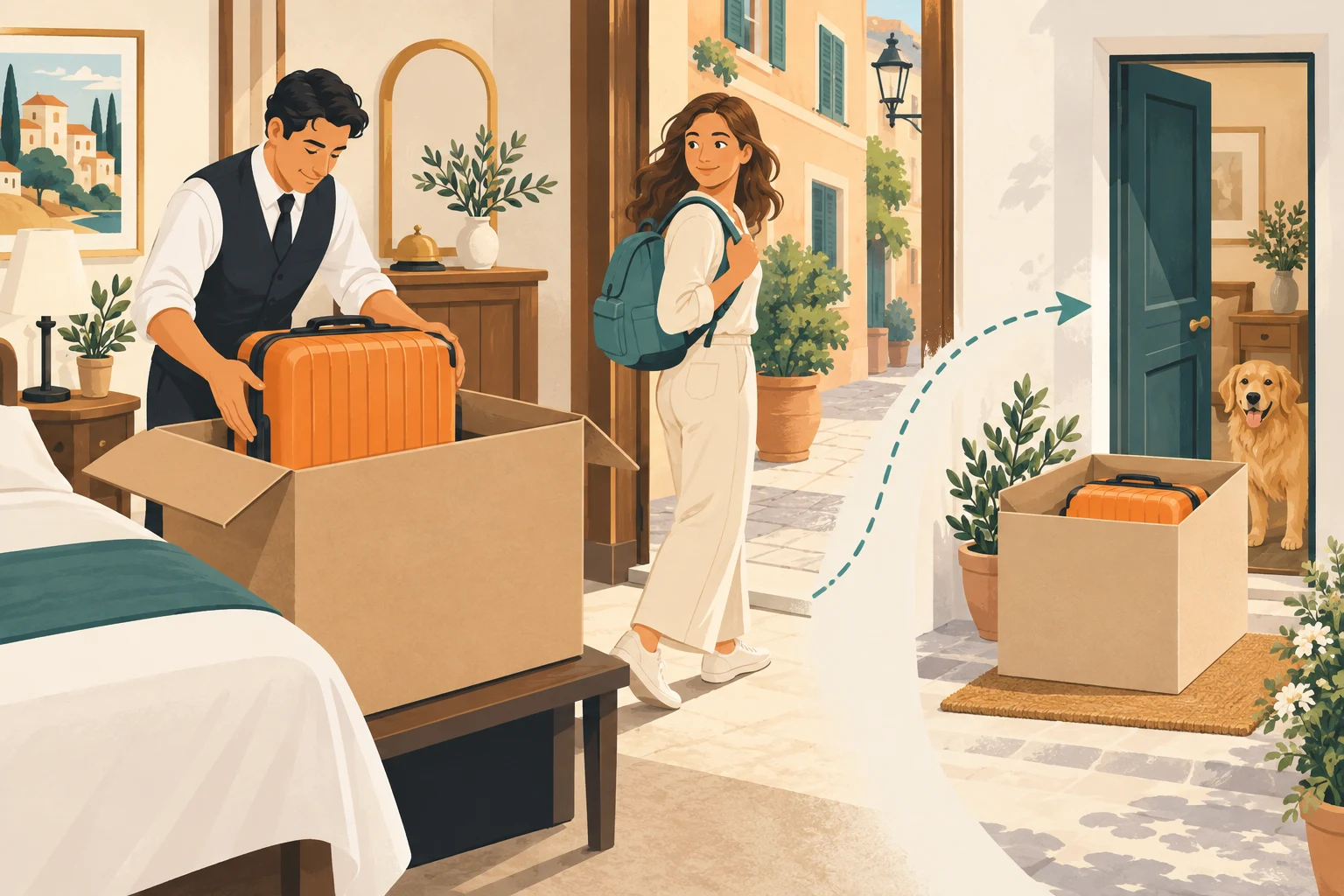
It happens on the last morning. The case that closed in Boston will not close in Rome, there is a second bag now, and somewhere inside are four bottles of wine that cannot travel by ordinary carrier. Before you spend an hour calling hotels and couriers, text us the pickup, destination and a photo of the bag. We check the live route, coordinate the handover and tell you exactly what must come out.
The short answer
- The bag can fly with you: check your airline's extra-bag fee and weight limits before paying for shipping.
- The bag is heavy, awkward or you're done carrying things: send us the route. We compare the live carrier options and tell you the price, packing rule and handover window.
- You're in an apartment, villa or hotel: send us the property contact. We coordinate the scheduled pickup instead of sending you to negotiate with the carrier.
- You need it by a fixed date: ask for the delivery estimate on your exact route before booking.
- It contains wine or spirits: leave them out of the luggage shipment. See the wine problem.
- Going the other way, to Italy: that is a different page. Ship luggage to Italy before you fly, collected at your door and waiting at your first hotel.
The four options, compared
| Option | How it is priced | Timing | Best for |
|---|---|---|---|
| Airline extra bag | Check your airline's current extra-bag fee | Arrives with you | A bag that meets your airline's size and weight limits |
| Self-arranged luggage shipping | Route quote: size, weight and destination matter | Check the selected service | Heavy or extra bags, if you can meet the driver |
| Express courier | Quote only: priced on volumetric weight, so a big light case costs like a heavy one | Check the route estimate | Urgent, small, valuable |
| Collected at your hotel, then shipped BagMeHome, anywhere in Italy |
Live route quote: weight, size, destination and service decide the total | Carrier estimate confirmed with the quote | Hotel, Airbnb and villa handovers you want us to coordinate |
Two things that table hides. First, a carrier still needs a real person to hand over the bag at a workable address. BagMeHome coordinates that with the hotel, host or contact you give us. Second, duty and acceptance depend on what is inside, not on who carries it, so an honest contents list matters.
1. Pay the airline for an extra bag
If the case meets your airline's limits and you can carry it, check the extra-bag fee before paying for shipping. Fees vary by airline, fare and when you add the bag.
Watch three limits. Most economy bags are capped at 23 kg, with a higher 32 kg ceiling on some fares and no single piece allowed above 32 kg. Oversize and overweight surcharges are punitive and are assessed at the desk, in front of a queue. And you still have to move the thing: through the hotel, onto the train, across the terminal.
The honest recommendation: if it fits the airline's limits and you can face carrying it, buy the extra bag. Everything below is for when that is not true.
2. Door-to-door luggage shipping
These are courier services dressed for travellers. Some routes accept a protected suitcase; others require a box. The selected service, destination and contents decide the rule, so do not assume “no box needed” until it appears in the quote.
Compare the full quote, not a headline price. Check whether it covers collection at your address, the number of bags, packaging, tracking and help if the handover changes. Ask for the delivery estimate for your route.
Where the work begins: pickup addresses. A carrier needs reception, a host or another person ready during the scheduled window. Italy is full of apartments, agriturismi and villas with no permanent desk. Give us the contact and booking name; coordinating that handover is our job.
3. Express courier
An express courier may be worth quoting when arrival time matters most. Compare its estimate for your route with the other available services. Two warnings.
They price on volumetric weight, meaning a large light suitcase is billed as though it were heavy. And the customs declaration is yours to get right: you are the shipper, so the value you write on the form is the value duty is calculated on. Under-declaring to save money is fraud, and customs open boxes.
Get a quote before assuming this is expensive or cheap. For one small dense box it can beat every luggage service; for a 70-litre case it rarely does.
4. Collected at your hotel, then shipped
Every option above starts with the same assumption: the bag is already at a door a van can reach, on a morning you are there to hand it over. In Italy that assumption breaks constantly. The apartment has no reception. The villa is up ninety steps. You are checking out at 10am in Florence and flying in four days, from Rome, after two more cities.
That is the gap we fill. You send us the pickup, destination, dates, bag size and property contacts. We compare live carrier quotes, check the packaging and contents rules, prepare the label and documents, and coordinate the scheduled handover. Outside Lake Como, the hotel, host or another agreed person gives the packed bag to the carrier; you do not have to broker the process yourself.
There is no honest universal starting price. Weight, dimensions, destination, pickup day and carrier decide the shipment total. You see the live route quote on WhatsApp before you commit.
Start with one message: pickup address, destination, collection date, number of bags and a photo. Send it on WhatsApp. We will ask only for the details needed to quote and coordinate it.
Check customs rules before you send the bag
Customs treatment depends on the destination, what is inside and whether the items were already yours or bought on this trip. A bag shipped separately may need different paperwork from one travelling with you. Tell us what is inside so we can prepare the carrier documents; the destination customs authority decides any duty or tax.
United States
Check CBP's guidance on unaccompanied articles if your bag travels separately. Keep a list of used belongings and purchases.
United Kingdom
Check the current rules for bringing goods into the UK. Tell us which items you bought during the trip and which you already owned.
Canada
Check CBSA's declaration guidance for goods arriving with you or later. Keep the contents list and purchase receipts.
Australia
Check Australian Border Force's current guidance, especially if the bag is travelling separately or contains new purchases.
European Union
A route between EU countries differs from a shipment to a country outside the EU, such as Switzerland or Norway. Share the exact destination so we can check the route and any documents the carrier needs.
Before you request a quote: list the contents, identify anything bought on the trip and keep receipts. We will flag the carrier's document requirements; customs makes the final decision.
The wine problem
Wine and spirits cannot go in an ordinary luggage shipment. Ask the winery or retailer whether it can ship bottles to your destination. If you plan to carry permitted bottles yourself, check your airline's baggage rules and the current customs allowance before buying.
Tell us if your bag contains alcohol before we quote. Do not hide bottles inside a bag handed to a carrier.
City by city
The logistics differ more than the rules do. Where you are decides which handover is workable. Send us the address and property contact; we check the route instead of asking you to decode the city yourself.
Rome
Termini has left-luggage but no shipping counter, and the historic centre is a ZTL. Apartments in Trastevere and Monti rarely have permanent reception. Send us the door address and the person who can meet the carrier; we check the scheduled pickup.
Florence
The leather market is where most "the case won't close" stories start. Florence's centre is also a ZTL, the stairs are steep and the lifts are rare. Send the shopping home from the apartment and carry a daypack to Siena.
Venice
No wheels, no vans, bridges with steps. A Venice pickup may need a hotel handover or an accessible meeting point such as Piazzale Roma. Give us the hotel contact and address; we confirm what the quoted carrier can actually collect.
Milan
The easiest city to ship from, with broad carrier coverage. The catch is timing: most people ask on their last morning. Message us earlier if you can; we will return the available pickup dates and exact packing rule.
Naples and the Amalfi Coast
Positano is a staircase with a village attached. A carrier may need a road-level handover rather than the accommodation door. Send us the precise address; we check the viable pickup point before you commit.
Lake Como
Where we started. Villas up ninety steps, ferries with luggage fees, apartments with no reception, and Malpensa an hour away. On Lake Como we can collect bags locally; for worldwide shipping, we arrange a carrier pickup for the agreed date and address.
Questions we get asked
Is it cheaper to ship a suitcase or pay for an extra checked bag?
An extra checked bag may cost less if the case meets your airline's limits and you can carry it. Compare your airline's current fee with a live shipping quote for your route, weight and bag size.
Do I pay duty on my own belongings?
It depends on the destination, what is inside and whether the items were already yours or bought on the trip. A separately shipped bag may need different paperwork. Tell us what is inside and check the destination customs authority's current rules.
Can I ship wine home from Italy?
Not yourself. Alcohol has to move between licensed businesses, so it must be sent by a winery or retailer that exports. Carrying it within your allowance is the alternative.
How long does it take?
It depends on the route, carrier and customs clearance. Send us your collection date and destination; we will share the selected carrier's delivery estimate with your quote. Leave a buffer if the bag must arrive by a fixed date.
Can I ship luggage to Italy before my trip?
Yes. Send it ahead from home: collected at your door, cleared as unaccompanied baggage, delivered to your first hotel or apartment before you land. How shipping luggage to Italy works.
Can you collect the bags from my hotel anywhere in Italy?
Yes. Send us the hotel, booking name and reception contact. We check the live carrier quote, coordinate the scheduled handover and send the label and documents. Outside Lake Como, the hotel, host or another agreed person hands the packed bag to the carrier. How Bag It Home works.
Travel and customs references: American Airlines — checked bag policy · US CBP — customs duty information · US CBP — Form 3299 · GOV.UK — bringing goods into the UK for personal use · CBSA — I Declare · Australian Border Force — duty free. Prices and allowances change; confirm before you book. This page is guidance, not customs advice.